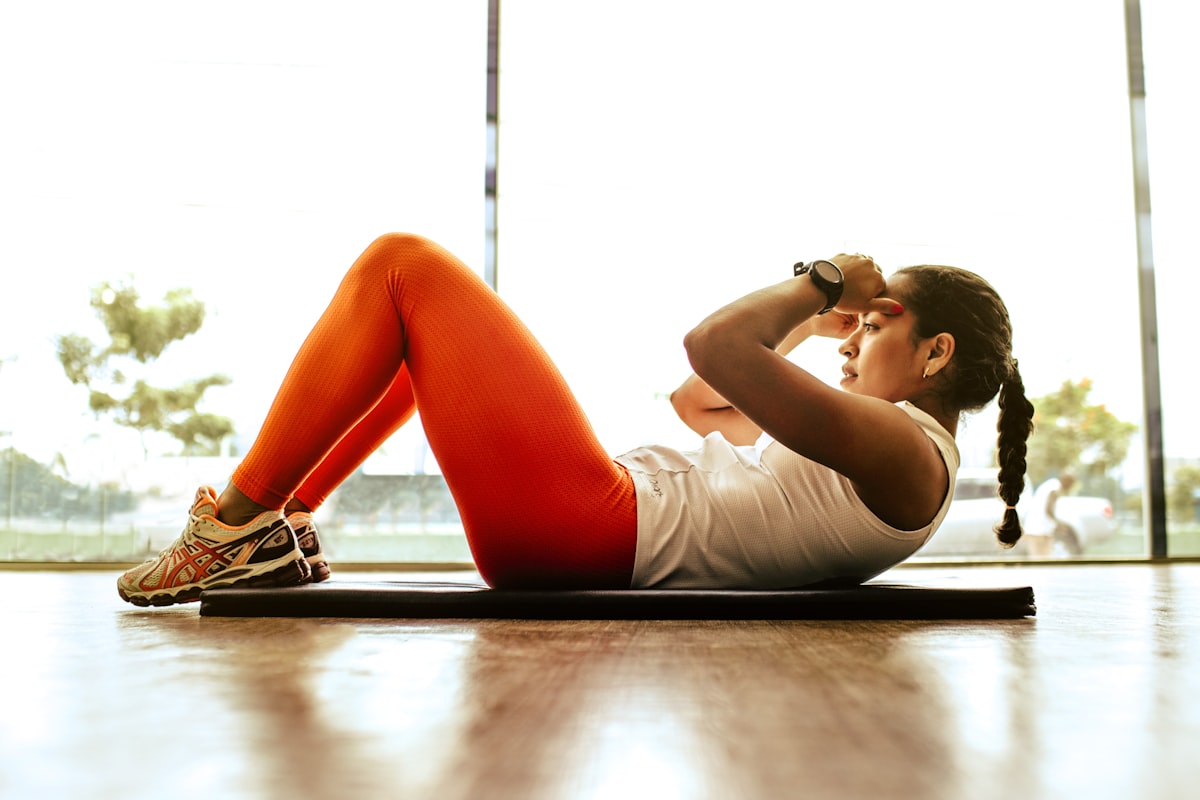
Iliotibial band syndrome (ITBS), commonly known as "runner's knee" (lateral), is one of the most frequent causes of lateral knee pain in runners. According to a meta-analysis published in the British Journal of Sports Medicine, it accounts for 5 to 14% of all running-related injuries (Louw & Deary, 2014).
Anatomy: What Is the Iliotibial Band?
The iliotibial band (ITB) is a thick band of connective tissue (fascia) that extends from the iliac crest (pelvis) to Gerdy's tubercle on the tibia. It is approximately 5 to 7 cm wide at the hip.
Anatomical Structure
- Proximal origin: tensor fasciae latae (TFL) and gluteus maximus
- Distal insertion: Gerdy's tubercle (anterolateral aspect of the tibia)
- Length: approximately 40-50 cm depending on body type
The ITB plays a crucial role in lateral stabilization of the knee and hip during running. It works in synergy with the gluteus medius to control hip adduction during the stance phase (Fredericson & Wolf, 2005).
Pathophysiology: Why Does It Hurt?
The Compression Hypothesis (Current Model)
Contrary to the old "friction" theory, recent research demonstrates that the primary mechanism is compression of richly innervated tissues located between the ITB and the lateral femoral epicondyle.
An anatomical study by Fairclough et al. (2006) published in the Journal of Science and Medicine in Sport revealed:
"The iliotibial band is not a mobile structure that slides over the epicondyle. It is firmly anchored to the distal femur via fibrous connections."
The pain comes from compression of a richly vascularized and innervated fat pad located beneath the ITB, at approximately 30° of knee flexion—the angle corresponding to the landing phase of the running stride (Fairclough et al., 2007).
Identified Biomechanical Factors
Biomechanical studies have identified several risk factors:
| Factor | Impact | Level of Evidence |
|---|---|---|
| Increased hip adduction | ↑ ITB tension | Strong (Noehren et al., 2007) |
| Excessive internal knee rotation | ↑ compression | Moderate |
| Hip abductor weakness | Compensations | Strong (Fredericson et al., 2000) |
| Low running cadence | ↑ ground contact time | Moderate (Heiderscheit et al., 2011) |
Symptoms and Diagnosis
Typical Clinical Presentation
- Lateral knee pain appearing after a reproducible distance/duration
- Worsening on descents (increased knee flexion at impact)
- Relief at rest, recurrence on resuming activity
- Possible "snapping" or crepitus sensation at the lateral condyle
Clinical Tests
- Noble's Test: Direct pressure on the lateral epicondyle at 30° of flexion
- Sensitivity: 77% | Specificity: 85% (Noble, 1980)
- Modified Ober's Test: Assesses ITB tension
- Useful for identifying associated tightness
- Renne's Compression Test: Repeated flexion-extension under weight bearing
- Reproduces the characteristic pain
Imaging
MRI can show thickening of the ITB and edema of the underlying fat pad, but is generally not necessary for clinical diagnosis (Ekman et al., 1994).
Treatment: What the Science Says
Acute Phase (0-2 weeks)
Goal: Reduce inflammation and pain
- Activity modification: Reduce volume/intensity (no complete rest unless pain is severe)
- Cryotherapy: 15-20 min, 3-4x/day (demonstrated effectiveness on pain, Bleakley et al., 2004)
- NSAIDs: Effective short-term, limit use to 7-10 days
⚠️ Avoid: Aggressive stretching of the ITB which can worsen compression (Falvey et al., 2010)
Rehabilitation Phase (2-8 weeks)
1. Hip Abductor Strengthening
This is the intervention with the highest level of evidence. The landmark study by Fredericson et al. (2000) demonstrated:
- Average 9.7% strength deficit in hip abductors on the affected side
- Symptom resolution in 6 weeks with a targeted strengthening protocol
- 92% success rate allowing return to running
Recommended exercises (progression):
- Side-lying hip abduction (clamshells)
- Single-leg glute bridge
- Single-leg squats (quarter squat → full squat)
- Lateral step-down
2. Posterior Chain Work
- Gluteus medius and maximus strengthening
- Pelvic control exercises
- Dynamic core work (side plank with abduction)
3. Soft Tissue Mobilization
Foam rolling the ITB has shown effects on range of motion but no direct effect on ITB structure itself (Cheatham et al., 2015). Its main value lies in:
- Reducing muscular tension in the TFL and vastus lateralis
- Neurophysiological effects (muscle tone reduction)
Running Technique Modification
Biomechanical studies suggest several adaptations:
| Modification | Effect | Study |
|---|---|---|
| ↑ Cadence (+5-10%) | ↓ hip adduction, ↓ ground contact time | Heiderscheit et al., 2011 |
| ↓ Step width | ↓ crossover angle | Meardon et al., 2012 |
| Avoid "crossover gait" | ↓ ITB stress | Noehren et al., 2014 |
Complementary Treatments
Demonstrated Effectiveness
- Extracorporeal shockwave therapy: Significant improvement vs placebo (Weckström & Söderström, 2016)
- Dry needling of the TFL: Pain reduction and functional improvement (Kietrys et al., 2013)
Limited or Unproven Effectiveness
- Corticosteroid injections: Temporary relief, no long-term effect (Gunter & Schwellnus, 2004)
- Isolated ITB stretching: Biomechanically ineffective (Falvey et al., 2010)
Surgery: A Last Resort
Reserved for refractory cases after a minimum of 6 months of conservative treatment. Techniques include:
- Partial ITB release (Z-plasty)
- Arthroscopic debridement of the synovial bursa
Success rate: 84-100% depending on case series, but studies have low methodological quality (Michels et al., 2014).
Prevention: Effective Strategies
Training Load Management
The 10% rule for weekly increase remains a prudent recommendation, although individual data varies (Nielsen et al., 2012).
Modifiable risk factors:
- Abrupt volume increase (>30% per week)
- Adding significant downhill running
- Surface change (road → trail)
Prevention Program
An effective prevention program should include:
- Strengthening: Hip abductors 2-3x/week
- Mobility: Hips and ankles
- Technique: Cadence and foot placement work
- Progression: Respect periodization principles
Shoe Choice
No study has demonstrated that a specific shoe type prevents ITBS. However, sudden changes in drop or cushioning can alter biomechanics and potentially increase risk (Malisoux et al., 2016).
Prognosis and Return to Running
Typical Timeline
- Mild cases: 2-4 weeks
- Moderate cases: 4-8 weeks
- Chronic cases: 3-6 months
Return-to-Running Criteria
- No pain on palpation of the epicondyle
- Symmetric strength in hip abductors (manual or dynamometric testing)
- Pain-free single-leg squat through full range of motion
- Brisk walking and stair climbing without symptoms
Progressive Return-to-Running Protocol
| Week | Volume | Intensity | Surface |
|---|---|---|---|
| 1 | 30% of usual volume | Easy (Z1) | Flat, soft |
| 2 | 50% | Easy | Flat |
| 3 | 70% | Moderate (Z2) | Variable |
| 4 | 90% | Normal | All |
| 5+ | 100% | Normal | All |
Key Takeaways
✅ ITBS is a compression pathology, not a friction one
✅ Hip abductor strengthening is the most effective treatment (evidence level A)
✅ Aggressive stretching of the ITB is counterproductive
✅ Cadence modification can reduce stress
✅ Gradual progression of training is essential for prevention
✅ Most cases resolve in 4-8 weeks with appropriate conservative treatment
Scientific References
- Fairclough J, et al. (2006). The functional anatomy of the iliotibial band during flexion and extension of the knee. J Anat, 208(3):309-316.
- Fairclough J, et al. (2007). Is iliotibial band syndrome really a friction syndrome? J Sci Med Sport, 10(2):74-76.
- Fredericson M, et al. (2000). Hip abductor weakness in distance runners with iliotibial band syndrome. Clin J Sport Med, 10(3):169-175.
- Fredericson M, Wolf C. (2005). Iliotibial band syndrome in runners: innovations in treatment. Sports Med, 35(5):451-459.
- Heiderscheit BC, et al. (2011). Effects of step rate manipulation on joint mechanics during running. Med Sci Sports Exerc, 43(2):296-302.
- Louw M, Deary C. (2014). The biomechanical variables involved in the aetiology of iliotibial band syndrome in distance runners. Br J Sports Med, 48(14):1068-1075.
- Noehren B, et al. (2007). Proximal and distal kinematics in female runners with patellofemoral pain. Clin Biomech, 22(9):951-956.
- Cheatham SW, et al. (2015). The effects of self-myofascial release using a foam roll on range of motion and muscle performance. Int J Sports Phys Ther, 10(6):827-838.
This article is for informational purposes only and does not replace medical advice. If you experience persistent pain, consult a healthcare professional specializing in sports medicine.